Share on Social



Few Memories
Kapadia Kothari
Bambai Se Aaya Mera Dost
Meher Marfatia – on city friendships that run deep and different
“The mountains pull very different people passionately together”
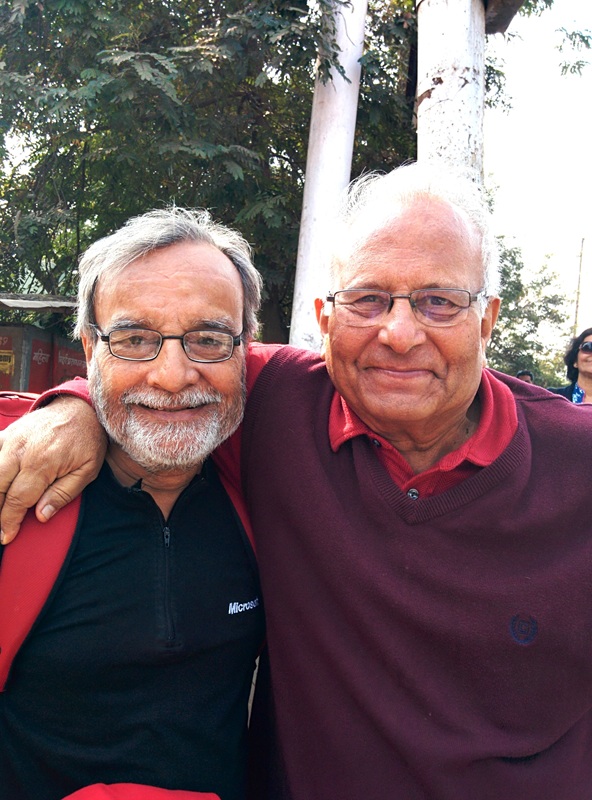
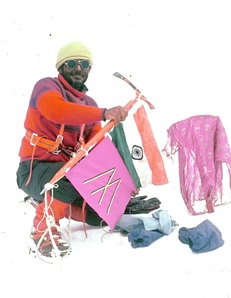
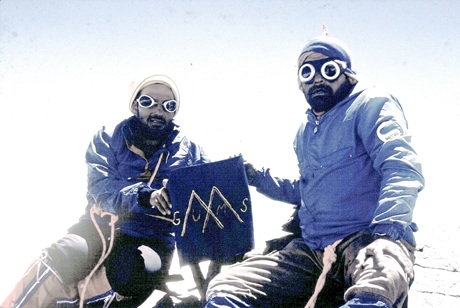
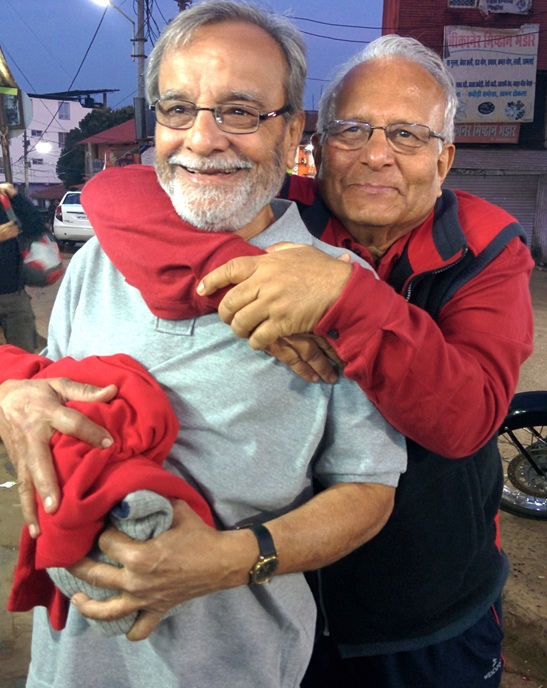
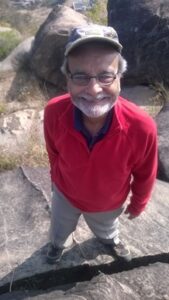
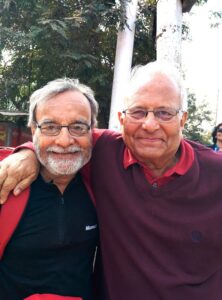
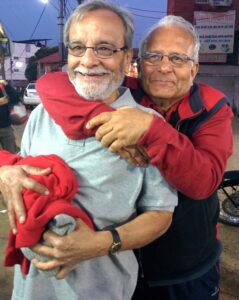
Avowed city lovers, Harish Kapadia and Vijay Kothari bond best in the clear air of the Himalaya
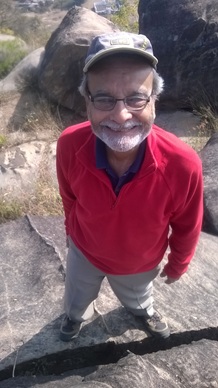
Harish Kapadia, 78, mountaineer and author
Vijay Kothari, 80, retired textile trader and trekker
India’s celebrated mountaineer, Harish Kapadia is an explorer in the finest tradition of great Himalayan pioneers. Chucking up a textile business to conduct over 178 treks and climbs in the Himalaya, backed by outstanding written and photographic documentation, he has campaigned for resolution of the Kashmir conflict through the Siachen Peace Park initiative in the Karakoram region. Naming his sons Sonam and Nawang, after Sherpa friends, he tragically lost the younger, Lt Nawang Kapadia of the Gorkha Regiment, in Kashmir.
Initiating joint expeditions with the UK, US, France and Japan, besides being an honorary member of Alpine Clubs worldwide, he is the recipient of prestigious adventure awards. Lecturing extensively, he is Editor Emeritus of The Himalayan Club Journal, as well as the author of innumerable multi-edition books, including High Himalaya Unknown Valleys, Siachen Glacier: The Battle of Roses, and Autumn Passage to the Himalaya: Treks, Travels and History.
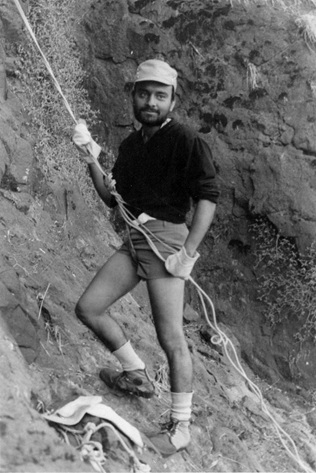
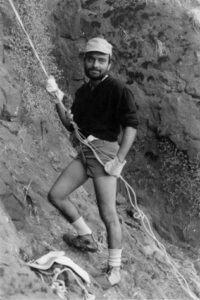
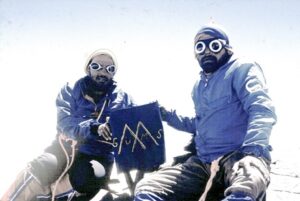
Reflecting his friend’s mentoring influence, the trekking instinct has taken Vijay Kothari scaling peaks and glaciers galore. Starting with the Sahyadri range in the Western Ghats, from 1968, he has first ascents to his credits (a first ascent is the first successful reaching of the top of a mountain or the first following of a particular climbing route).
The friends swap views on fresh air, family ties and food – over delectable Gujarati lunch in Harish bhai’s home.
_______________________________________________________________
Harish Kapadia: It’s strange how life chooses one’s path ahead. My father had a Raymond’s stockist shop in Laxmidas Market in Vithalwadi, Kalbadevi. Not inclined to qualify for an MBA, I sat at that counter for some years, preferring to watch cricket whenever possible. My son Sonam became a banker and Nawang dismissed the shop as “an air-conditoned jail”. The turning point lay in realising that neither was continuing at the shop. I gave up the enterprise happily for the call of the mountains instead.
Vijay Kothari: After my Inter exam in Ruia College in 1962, I joined the velvet yarn-to-cloth trade my father and uncles ran from a factory in Ghatkopar. Among items we sold to wholesale merchants were the black prayer caps Parsis wear – now outdated because they are replaced by manmade velvet, rayon and other materials.
I remember the June 1969 day when we were both out with The Climbers Club. We got chatting a year later, in the same bogey of a Kalyan local, changing trains at Karjat for an overnight trek to Chanderi.
HK: Soon after, I realised he is the man to feed everyone! His naasta-paani bandobast, especially homemade batata nu rasa valoo shaak was what we looked forward to on nights at Dudha Lake near Mumbra. It doesn’t exist today, but would provide water for GIP Railway steam engines that fascinatingly chugged past us. That rural charm has disappeared. Hiking societies were a hundred times more active too.
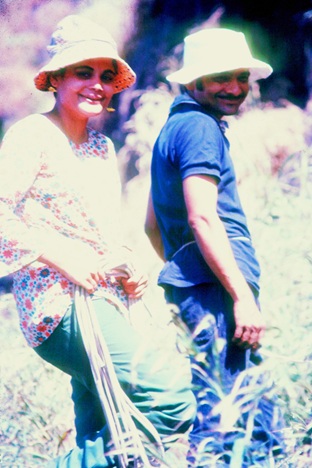
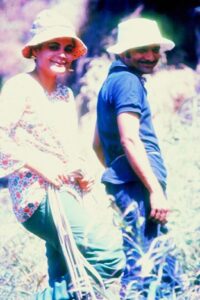
VK: How the Mumbai landscape has changed. There were plenty of green hills around Ghatkopar, which I know since childhood. We’d cycle from here to Vihar Lake and Juhu. I come from a simple chawl. I’ve enjoyed wonderful outings in the mountains with Harish bhai and his wife Geeta ben. We have done some major climbs, including the 1992 Indian-British Panch Chuli expedition he led with Sir Chris Bonington.
Besides this main interest, he introduced me to music concerts, movies, plays. I had nil exposure to them earlier. The fruit of our friendship is 100 per cent understanding and respect for each other, despite being so different – ghani joodi personality amaari.
HK: Vijay gives me fantastic elder brother advice. I take it because we have mutual trust and confidence. Calling him Vijay feels odd. Being the most balanced person, his nickname is Paka. For his composure temperament and organised temperament, he’s considered “paka kaam no” – seldom losing his cool about anything or doing things in haste.
An exception, of course, was a life-threatening situation. Paka was caught in a critical mishap on Panch Chuli, when he fell behind the rest by one day. He missed his footing by a step against a soft snow wall and rolled like a drum for 300 metres. Calm on most occasions, he had mistakenly hurried to catch up with the group.
VK: And Harish bhai’s 1974 accident was terrible. While returning from the amazing first ascent of Devtoli peak in Nanda Devi Sanctuary, he fell in a crevasse, dislocating his hip. Carried by rescue porters over 13 painful days to base camp, he was flown back in an IAF helicopter. Six weeks in plaster, two years walking on crutches and one month with a stick, he was off again trekking in Sikkim.
HK: Pakaji’s hand-churned ice cream kept me going, plus the superb jalebi-gathia and mavo from his home. My saviour drove many weekends to pick me up and drop me from treks, driving from Ghatkopar to Pedder Road, near my house, and back.
With the toughest challenges, there’s nothing like the invigorating beauty of the mountains. Nothing can match this junoon, the madness to try new peaks.
VK: Really, what else can beat the cool of the hills and my home-churned ice cream. No party is complete without it. Just as Geeta knows there’s no better meal for me than her dal-bhaat.
HK: It’s only honest to mention the bad language Paka and I exchange. Our salutations are sprinkled with swear words. We’ve travelled to Pachmarhi every December-January, since 1971, for rock climbing and rope practice. The mountains pull very different people passionately together. When not up on slopes, we’re pure Bombay people. I even write best in this crazy city’s noise.
VK: Invested in something, you love it. Bombay is that shared emotion. Geeta has accompanied us on all treks; her paintings of the mountains from Mussoorie are beautiful. She is extremely important to our friendship. I’m single. Harish is close to my nephews, the way I’ve been with his boys. We are family first – and also friends.
Author-publisher Meher Marfatia writes monthly on city friendships. You can reach her at meher.marfatia@mid-day.com/www.mehermarfatia.com